
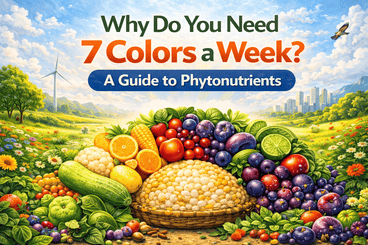

Why Do You Need 7 Colors a Week? A Guide to Phytonutrients
Have you ever been told to “eat the rainbow”? It turns out, this is more than just a catchy phrase. It’s a simple, powerful guide to unlocking a world of vibrant health benefits. The secret lies in phytonutrients, the natural compounds that give plants their dazzling colors. Think of them as a specialized team of workers, each with a unique job to do in your body. From the deep red of a beet to the rich green of spinach, every color represents a different set of these powerful compounds, working together to repair, protect, and energize your systems.
This chapter will guide you through the science of phytonutrients, explaining why they are essential for your health and how you can easily incorporate a full spectrum of colors into your diet. We will explore the specific benefits of each color group and provide practical tips for making your plate a vibrant masterpiece. By the end, you will understand how tracking your color intake can be a fun and rewarding way to improve your overall well-being.
What Are Phytonutrients and Why Do They Matter?
Phytonutrients, also known as phytochemicals, are natural bioactive compounds found in plant-based foods that give them their distinctive color, flavor, and aroma. Unlike vitamins and minerals, they are not considered essential for keeping you alive. However, they are essential for preventing disease and promoting optimal health. These compounds are the plant’s defense mechanism, protecting it from environmental threats like insects, fungi, and harmful UV radiation. When we consume these plants, we inherit their protective benefits, which can help shield our bodies from chronic diseases.
There are thousands of different phytonutrients, and each one has a unique set of health-promoting properties. For example, the lycopene that gives tomatoes their vibrant red color is a powerful antioxidant that has been linked to a reduced risk of certain cancers and heart disease. Similarly, the anthocyanins found in blueberries and other purple foods have been shown to have anti-inflammatory and neuroprotective effects. By eating a wide variety of colorful plant foods, you can ensure that you are getting a diverse range of these beneficial compounds, which work together to support your body’s natural defense systems.
What Does Each Color Do for Your Body?
Imagine your body as a bustling metropolis. For this city to thrive, it needs a diverse workforce of specialized teams, each responsible for a different aspect of its maintenance and well-being. This is where the magic of phytonutrients comes in. Each color group represents a different team of these microscopic workers, each with a unique set of skills and a specific job to do. Let’s take a closer look at the roles these colorful teams play in keeping your internal city running smoothly.
| Color Group | Key Phytonutrients | Primary Functions | Food Sources |
|---|---|---|---|
| Red | Lycopene, Ellagic Acid | Heart health, cancer prevention, prostate health | Tomatoes, watermelon, pink grapefruit, raspberries |
| Orange/Yellow | Beta-carotene, Curcuminoids | Immune support, vision health, skin health | Carrots, sweet potatoes, oranges, turmeric |
| Green | Glucosinolates, Lutein | Detoxification, hormone balance, eye health | Broccoli, kale, spinach, Brussels sprouts |
| Blue/Purple | Anthocyanins, Resveratrol | Brain health, anti-aging, reduced inflammation | Blueberries, blackberries, eggplant, grapes |
| White/Brown | Allicin, Quercetin | Anti-inflammatory, gut health, liver support | Garlic, onions, mushrooms, cauliflower |
The red team, rich in lycopene and ellagic acid, are the guardians of your cardiovascular system. They work tirelessly to protect your heart and arteries from damage, and have been shown to play a role in preventing certain types of cancer. The orange and yellow team, armed with beta-carotene and other carotenoids, are your immune system’s frontline defenders. They also play a crucial role in maintaining healthy vision and radiant skin. The green team, featuring compounds like glucosinolates and lutein, are the master detoxifiers. They help your body eliminate harmful toxins and support hormonal balance. The blue and purple team, packed with anthocyanins and resveratrol, are the protectors of your brain. They help to enhance memory, improve cognitive function, and fight the effects of aging. Finally, the white and brown team, with allicin and quercetin, are the anti-inflammatory and gut-soothing specialists. They work to reduce inflammation throughout the body and promote a healthy digestive system.
How to Incorporate 7 Colors a Week into Your Diet?
Eating a rainbow of colors might sound like a daunting task, but it’s far more achievable than you might think. The goal isn’t to consume all seven colors every single day, but rather to aim for a wide variety throughout the week. The key is to start with small, manageable changes that you can easily incorporate into your existing routine. For instance, you could start by adding a handful of colorful berries to your morning yogurt or oatmeal, or a side of steamed broccoli and carrots to your evening meal.
At The Lively Three, we believe in the power of simple, sustainable habits. That’s why we’ve developed our three simple rules to help you on your journey to better health. The first rule is to aim for 30 plants per week. This encourages you to explore a wider variety of fruits, vegetables, nuts, seeds, and legumes, which naturally leads to a more colorful diet. The second rule is to consume 500g of fruits and vegetables per day. This is the global benchmark for reducing the risk of chronic diseases, and it’s a great way to ensure you’re getting enough of these nutrient-dense foods. By focusing on these two rules, you will naturally start to incorporate a wider spectrum of colors into your diet, without feeling overwhelmed or restricted.
How Can Tracking Colors Improve Your Health Score?
In our data-driven world, tracking can be a powerful tool for creating positive change. When you log your meals in The Lively Three app, you’ll receive a “Full Color Score” that provides a visual representation of your phytonutrient intake. This isn’t about achieving a perfect score or feeling guilty about what you’re not eating. Instead, it’s about fostering a sense of awareness and empowerment. Your “Rainbow Record” can serve as a gentle nudge, encouraging you to try new foods and fill in any nutritional gaps.
By turning healthy eating into a fun and engaging challenge, you’re more likely to stick with it for the long term. The app also provides personalized recommendations and recipes to help you on your journey. Whether you’re looking for a new way to prepare your favorite vegetables or a creative recipe to help you incorporate more colors into your diet, The Lively Three app has you covered. It’s like having a personal nutritionist in your pocket, guiding you towards a healthier, more vibrant life.
Ready to embark on your own colorful culinary adventure? Download The Lively Three app today to start tracking your Full Color Score and building your Rainbow Record. Join our thriving community and discover just how easy and rewarding it can be to eat the change you want to see in the world.
