
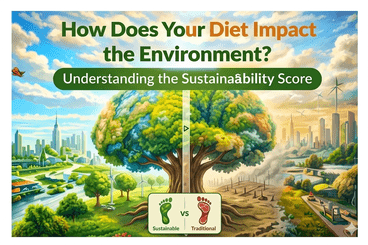

How Does Your Diet Impact the Environment? Understanding the Sustainability Score
In our quest for better health, we often focus on the immediate effects of our food choices on our bodies. We count calories, track macros, and celebrate vibrant, nutrient-dense meals. But what if every bite we take could also be a vote for a healthier planet? The connection between a flourishing you and a flourishing Earth is more intimate than you might imagine. Every meal is an opportunity to nourish not just yourself, but also the very environment that sustains us. This is not a story of restriction or sacrifice, but one of empowerment, where small, delicious changes can create a ripple effect of positive change for you and for mother nature.
How Are Human Health and Planetary Health Connected?
Human health and planetary health are deeply intertwined, forming a symbiotic relationship where the well-being of one directly influences the other. A healthy planet provides the clean air, fresh water, and fertile soil necessary to grow nutritious food, which in turn supports human vitality. For example, a biodiverse ecosystem supports a variety of plant life, making it easier to achieve the goal of eating 30 different plants per week, which is crucial for a healthy gut microbiome.
The industrial food system, however, has often prioritized convenience and profit over this delicate balance. This has led to practices that degrade our environment and, consequently, our health. The rise of monoculture farming, for instance, depletes soil nutrients and reduces the diversity of foods available, making it a challenge to consume the 7 colors per week that provide a wide range of phytonutrients essential for our bodies. The health of our planet is not a separate issue from our personal health; it is the very foundation upon which it is built. When we choose foods that are grown sustainably, we are not only choosing better nutrition for ourselves but also investing in a healthier, more resilient world for generations to come.
What Is the Environmental Impact of Ultra-Processed Food?
Ultra-processed foods (UPFs) have a significant and detrimental environmental impact, stemming from their resource-intensive production, extensive supply chains, and excessive packaging. The manufacturing of these foods often relies on a small number of commodity crops, like corn, wheat, and soy, which are grown in vast monocultures that degrade soil health and reduce biodiversity. This industrial-scale farming is a major contributor to deforestation, water pollution, and greenhouse gas emissions.
The journey of a UPF from factory to table is a long and carbon-heavy one. These products are transported across vast distances, requiring significant energy for refrigeration and transportation. Furthermore, the packaging of UPFs is a major source of plastic pollution. Think of the wrappers, bags, and trays that are designed for single use and often end up in landfills or our oceans. As our brand ethos states, “Our guts didn’t break on their own. Neither did the planet. Ultra-processed convenience took a toll on both.” Choosing whole, unprocessed foods is a powerful way to push back against this trend, reducing your carbon footprint and supporting a more sustainable food system.
What Is a Sustainability Score and How Does It Work?
The Sustainability Score is a feature within The Lively Three app designed to help you understand the environmental impact of your food choices in a simple, intuitive way. It works by analyzing the foods you log and assigning a score based on factors like carbon footprint, water usage, and land use associated with their production. A higher score indicates a more sustainable diet, reflecting choices that are kinder to the planet.
This score is not about achieving perfection, but about making informed decisions. It empowers you to see the direct impact of your dietary habits and encourages gradual shifts towards more sustainable eating. For example, swapping a beef burger for a lentil-based one can significantly improve your score, as plant-based proteins generally have a much lower environmental footprint than animal products. The app provides personalized insights and recommendations, helping you to make choices that are not only good for your health but also for the environment.
| Food Choice | Typical Sustainability Impact | How it Affects Your Score |
|---|---|---|
| Lentils | Low carbon and water footprint | Boosts your score |
| Chicken | Moderate environmental impact | Neutral or slight decrease |
| Beef | High carbon and water footprint | Significantly lowers your score |
| Almonds (in excess) | High water usage in certain regions | Can lower your score despite being a plant |
| Seasonal, local vegetables | Very low environmental impact | Significantly boosts your score |
How Can Small Changes Make a Big Difference for the Earth?
Small, consistent changes in your diet can collectively make a substantial positive difference for the Earth by reducing your environmental footprint one meal at a time. It’s not about a complete overhaul overnight, but about mindful shifts that add up. Committing to the global benchmark of eating 500g of fruits and vegetables per day is a perfect example of a small change with a big impact.
This simple rule not only floods your body with essential nutrients, lowering your risk of chronic diseases, but it also supports a more sustainable food system. Fruits and vegetables generally have a much lower carbon and water footprint compared to animal products and ultra-processed foods. By focusing on adding more plants to your plate, you are naturally displacing less sustainable options. Think of it as a gentle rebalancing of your diet. Every time you choose a colorful salad over a processed snack, or a hearty vegetable stew over a steak, you are casting a vote for a healthier planet. These small acts, when multiplied by a community of individuals, create a powerful movement for change, proving that what’s good for you is also good for the world.
Ready to see how your diet stacks up? It’s time to stop guessing and start knowing. Check your Sustainability Score in The Lively Three app today to see your personal environmental impact and discover delicious, simple ways to eat the change you want to see in the world.
Download the app and start your journey to a healthier you and a healthier planet:
